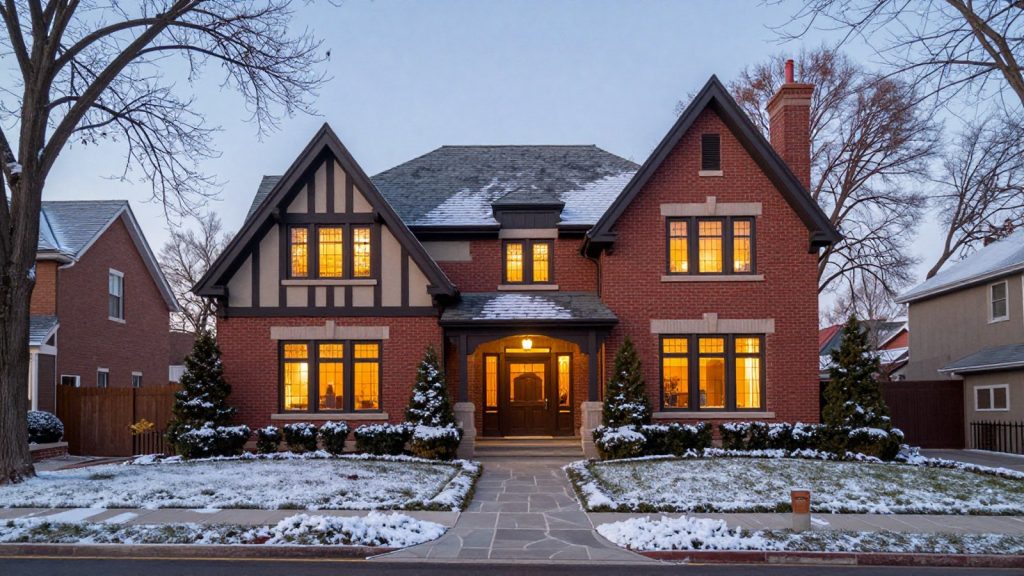
Should you list a Denver home above $1 million this winter or wait for spring?
It depends on your timing more than the calendar. Winter brings fewer competing listings and a smaller but motivated group of buyers, while spring brings more buyers and more competition. If you need to move by early next year, a well prepared winter listing can work; if you have flexibility, use the winter to prepare and list early in spring.
Selling a house in Denver between November and February is a different job than selling one in April. Fewer homes are on the market, buyers are fewer but often have a deadline, and short days and snow change how a home shows. This guide walks through what the latest public data says about the Denver metro heading into winter, how to price against thinner competition, how to prepare a home for winter showings and photos, what selling costs in Colorado, and a simple timeline if you decide to wait for a spring list date.
What does the latest data say about the Denver market heading into winter?
The most recent full month of data is September 2026. In its September 2026 Market Trends Report, the Denver Metro Association of Realtors (DMAR) counted 13,567 active listings at the end of the month and 4.76 months of inventory across the metro, which DMAR describes as giving buyers more selection and more room to negotiate. Closed sales fell to 2,849, the fewest for a September in DMAR’s records going back to 2008. The close price to list price ratio was 98.45 percent, up from 98.32 percent a year earlier, and the median time in the MLS was 32 days, down from 35.
Homes at $1 million and above moved faster than the broader market in that report: DMAR put their median time in the MLS at 21 days in September, and new listings in that price range rose 12.15 percent from August. Year to date, the same report counted 4,449 closed sales at $1 million and above, up 1.99 percent from last year, while total metro sales were down 4.96 percent.
DMAR also noted that most September closings were contracts signed in August, so the effect of higher rates in September is more likely to show up in October and November closings. The report expects listings to taper through the fourth quarter as some sellers pull homes for the holidays, which means less competition for the buyers who stay active.
Source: Denver Metro Association of Realtors, September 2026 Market Trends Report. Figures cover all reported sales in the area, not necessarily sales by Sara Garza, Donna Ryan or LIV Sotheby’s International Realty.
These are metro figures. They describe Denver, Arapahoe, Douglas, Jefferson and the other metro counties together, not any one neighborhood, and conditions on a given street can differ. For more on how the metro splits into price bands, see our explainer on Denver’s three market tiers.
How does winter compare with spring for competing listings?
The clearest seasonal pattern in DMAR’s data is inventory. Listings build through summer and thin out in winter.
| Month (2026) | Active listings at month end, metro | Close price to list price ratio, as reported |
|---|---|---|
| January | 8,228 | 97.94 percent (average) |
| March | 9,846 | 99.13 percent |
| September | 13,567 | 98.45 percent |
Source: Denver Metro Association of Realtors, January 2026 Market Trends Report, March 2026 Market Trends Report and September 2026 Market Trends Report. Figures cover all reported sales in the area, not necessarily sales by Sara Garza, Donna Ryan or LIV Sotheby’s International Realty.
Two things stand out. First, a home listed in January this year was competing with far fewer listings than one listed in September. Second, the share of list price sellers received was highest in March, when the spring market picked up, and lowest in January. DMAR’s January report also noted a warm winter that pulled spring activity earlier than usual, so the line between a late winter and an early spring listing can be thin. One year of data is not a forecast, and nobody can promise how next spring will compare.
Who buys a Denver home in the winter?
Winter buyers tend to be fewer and more focused. The people touring homes in December and January often have a reason to be out in the cold: a job transfer with a start date, a lease ending, a sale of their own that just closed, or a goal of finishing a purchase before the end of the year or soon after it. Relocation buyers often have a short window to see homes and make a decision on one trip.
That has practical effects for a seller. Showings may be fewer but more serious. Buyers are more likely to ask about move in dates, possession terms and whether you can close on a specific day. Flexibility on those terms can matter as much as price.
Financing is also part of the picture. Freddie Mac’s Primary Mortgage Market Survey put the average 30 year fixed rate at 7.40 percent for the week of October 15, 2026, up from 6.95 percent in mid September. DMAR’s September report says rate buydowns, seller paid concessions and adjustable rate loans have become common points in negotiation. For buyers at $1 million and above, many loans are jumbo loans with their own pricing; our article on jumbo loan rates for Denver homes above $1 million covers how that works.
Source: Freddie Mac Primary Mortgage Market Survey, week of October 15, 2026, as published by the Federal Reserve Bank of St. Louis. Figures are national averages and are not sales by Sara Garza, Donna Ryan or LIV Sotheby’s International Realty.
How should you price a home against fewer competing listings?
Less competition does not mean buyers will pay more than the home is worth. It means each buyer has fewer homes to compare yours with, so the comparison they do make is sharper. A winter buyer who sees three homes in your price range will notice quickly if yours is priced above the other two without a clear reason.
DMAR’s September report advises pricing for where the market is going rather than where it has been. In practice, we usually advise sellers to start from recent closed sales near them, not from the highest asking price on the street, and to look closely at homes that sat without an offer. A price that brings showings in the first two to three weeks tends to give you more control than a price you plan to reduce later.
With rates where they are, think about how you will answer a request for a concession. Offering to pay for a rate buydown or part of the buyer’s closing costs is a cost to you, just like a price reduction, but it can do more for a buyer’s monthly payment. Decide in advance how much room you have and in what form.
If you would like a starting point for your own home, you can request a private home value estimate.
How do you prepare a home for snow, short days and winter photos?
Winter showings happen in the dark more often than spring ones. By early December, the sun sets before most people leave work, so many buyers will see your home at night or in low light. Preparation that matters most in winter:
- Photograph early or in the best light. If you are thinking about a winter listing, have exterior photos taken before the leaves are gone or on a clear day after a snow melt.
- Lighting. Replace dim or mismatched bulbs, add lamps to darker rooms and use timers so the home is lit for evening showings.
- Snow and ice. Arrange for walks, steps and the driveway to be cleared after every storm, and have ice melt by the door.
- Heat and comfort. Keep the home warm during showings and have the furnace serviced before you list, with the receipt ready for the buyer’s inspector.
- Roof, gutters and windows. Winter makes ice dams, drafts and drainage problems easier to spot. Fix what you can before an inspection finds it.
What does it cost to sell a house in Colorado?
The costs of a sale are set mostly by your contract and your agreements, so the right numbers for your home come from your title company and your listing agreement. The main categories:
| Cost | What it is | Who sets or pays it |
|---|---|---|
| Brokerage compensation | Compensation for the listing brokerage and, if offered, the buyer’s brokerage | Negotiated and set in your listing agreement |
| Owner’s title insurance | A one time premium paid at closing for the buyer’s owner’s policy | The Colorado Real Estate Commission’s approved contract has a section that sets who pays |
| State documentary fee | One cent for every $100 of the price on a deed, with no fee at $500 or less | Set by state law; your contract and closing statement show who pays it |
| Concessions | Seller paid rate buydowns, closing cost credits or repair credits | Negotiated with the buyer |
| Payoffs and prorations | Your mortgage payoff, property tax proration and any HOA fees | Set by your loan, your county treasurer and your HOA |
| Preparation | Repairs, cleaning, staging, snow removal and photography | Your choice |
The Colorado Division of Real Estate explains that an owner’s title policy is paid for with a one time premium at closing and that the Commission’s contract addresses who pays for it, so read that section of your contract carefully (Colorado Division of Real Estate, title insurance notice, July 2021). The state documentary fee is small: under Colorado law it is one cent per $100, which works out to $150 on a $1.5 million sale (Pueblo County Clerk and Recorder fee schedule, effective July 2025). Ask your title company whether any other local fee applies to your address.
Source: Pueblo County Clerk and Recorder, recording fee schedule effective July 1, 2025, citing the state documentary fee. The sale price is an example for illustration, not a sale by Sara Garza, Donna Ryan or LIV Sotheby’s International Realty.
Year end tax timing. Whether your sale closes in December or January decides which tax year it falls in, which can affect capital gains and how the sale lines up with the purchase of your next home. Talk with a tax adviser before you choose a closing date.
If you wait for spring, what is the timeline from now?
The months between now and a spring list date are the best time to handle repairs, interviews and planning without the pressure of being on the market. A simple plan for a March or April list date:
| When | What to do |
|---|---|
| Late October to November | Get a home value estimate, talk with a tax adviser about timing, and take exterior photos while the trees still have color |
| December | Make a repair list, get bids, and schedule contractors before their spring calendars fill |
| January | Complete repairs, consider a prelisting inspection, and decide on paint and updates |
| February | Declutter, stage and plan the launch; review the latest DMAR report for early spring conditions |
| Early March | Final photography, pricing review against recent closed sales, and list |
| Late March to April | Showings, offers and negotiation; plan possession and moving dates |
Frequently Asked Questions
Is it a bad idea to list a house in Denver in December?
Not necessarily. DMAR’s reports show fewer active listings in winter than in summer or fall, so a December listing faces less competition. The buyers out in December are fewer but often have a deadline, such as a job start or a year end goal. The tradeoff is a smaller pool of buyers and shorter days for showings.
How many homes are for sale in the Denver metro right now?
DMAR’s September 2026 Market Trends Report counted 13,567 active listings across the metro at the end of September, with 4.76 months of inventory. DMAR expects listings to taper through the fourth quarter. These are metro figures, not counts for any single neighborhood.
Do homes above $1 million sell more slowly in winter?
Time on the market depends heavily on price and condition. DMAR’s September 2026 report put the median time in the MLS for $1 million and above at 21 days, compared with 32 days for the whole metro. Winter pace for your home will depend on how it is priced against the few listings it competes with.
Should I wait until spring to sell my Denver home?
If you have flexibility, waiting lets you prepare without pressure and meet the larger group of spring buyers, though you will also face more competing listings. If you need to sell by early next year, a well priced and well prepared winter listing can work. Nobody can promise where prices will be in spring.
Every home and every seller’s timing is different. If you would like to talk through whether a winter or spring listing fits your plans, schedule a private consultation with us.