What should you check before buying a Cherry Creek condo above $1 million?
Look past the unit to the building: read the reserve study, the budget, the board minutes and the insurance before you commit. Confirm how the loan will work, since a loan above the Denver County conforming limit is a jumbo loan and the lender will review the building as well as you. Then inspect the shared systems as closely as the unit itself.
Cherry Creek condos at $1 million and above are a different purchase from a detached house a few blocks away. You are buying a share of a building, a budget and a board along with your own walls, and the condition of all three shapes what you pay over the years you own it. This guide walks through the buildings in Cherry Creek, what sets one unit’s value above another, how HOA dues and reserves work, how financing changes above the conforming limit, and which documents to read before you write an offer. For the wider picture of the area, see our Cherry Creek neighborhood page.
What Kinds of Condo Buildings Will You Find in Cherry Creek?
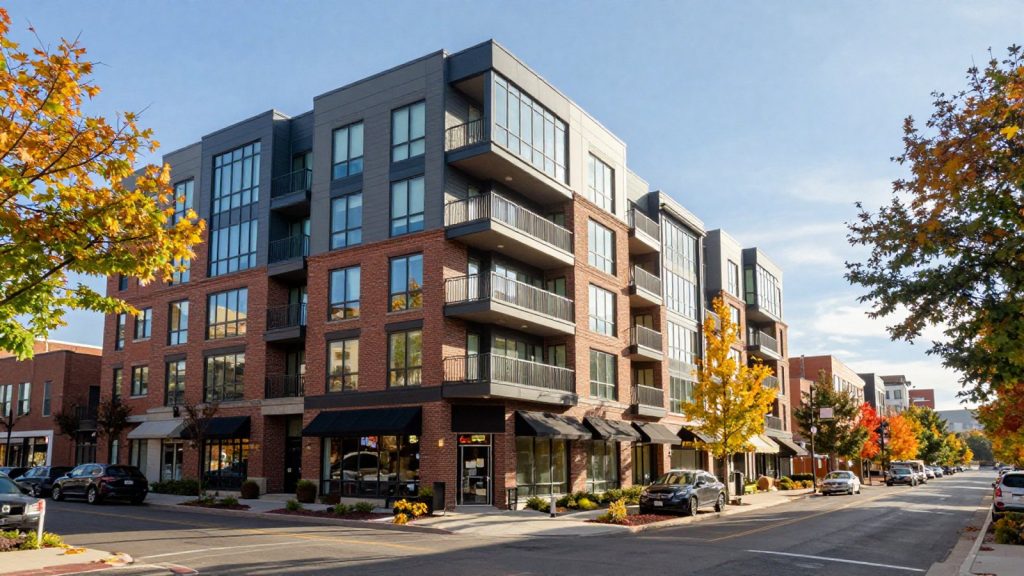
Many of the condos that trade above $1 million sit in Cherry Creek North, the walkable grid of shops and residences north of First Avenue. Here a common pattern is a midrise or taller building with shops or offices on the street level and residences above, often with a doorman or concierge desk, a controlled access garage below grade and shared rooftop or terrace space. Many of these buildings are fairly recent.
Closer to Cherry Creek and the Cherry Creek Trail you will also find older buildings from earlier decades. Their shared spaces are often simpler and their mechanical systems further along in their life, so the condition of the roof, windows, plumbing risers and elevators matters even more.
In a building with retail on the street level, ask early how the declaration splits costs between commercial and residential owners; lenders look at that too.
What Sets the Value of One Unit Over Another?
Two units in the same building can differ widely in price. The features that usually move value are steady across buildings:
- Floor and exposure. Higher floors with mountain views to the west generally command more than lower floors facing an alley or a neighboring wall. A view that a planned building could block is worth less than one that is protected by what is already built around it.
- Parking. Whether the unit comes with one or two spaces, and whether they are deeded to the unit or only assigned by the association, affects both value and resale. A second space is a real point of difference at this price.
- Outdoor space. Private terraces, especially larger ones, are scarce and priced accordingly.
- Shared amenities. Concierge service, a fitness room, guest suites and a pool add appeal, and they also add to the monthly dues.
- Age and condition of the building. A well funded building with a recent roof and modern systems supports value; a building facing large repairs weighs on it.
For a closer look at how features translate into price, our article on what goes into your Denver home’s value covers the same questions for houses.
How Are HOA Dues, Reserves and Special Assessments Set?
Monthly dues pay for running the building today and saving for repairs later. In a full service Cherry Creek building, dues cover items like staff, insurance on the structure, common utilities, elevator service, landscaping and snow removal, and a contribution to reserves. Compare what dues cover, not just the amount.
The reserve fund is the part that deserves the most attention. A reserve study lists each major component of the building, how long it should last and what it will cost to replace, then sets out how much the association should be saving each year. Colorado’s Common Interest Ownership Act lists the most recent reserve study, if the association has one, among the records an association keeps for owners, along with three years of financial statements, minutes of owner and board meetings, and the current declaration, bylaws, rules and policies, as summarized in a Colorado Division of Real Estate presentation on association records. The same presentation notes that the operating budget, current assessments and insurance information belong to the annual disclosures under a separate section of the act.
When reserves fall short of what the study calls for, the board has two tools: raise dues or levy a special assessment. Read the minutes for the last two or three years. Talk of a roof, a facade repair, a garage membrane or an elevator modernization that has not yet been funded tells you more about future costs than the current dues do.
Which Documents Should You Request Before an Offer?
The Colorado Real Estate Commission’s standard purchase contract gives the buyer a period to receive and review association documents, with a deadline to object. We suggest starting that review even earlier: many of these items can be requested from the listing agent before you write an offer, which makes the contract period a time to confirm rather than discover.
| Document | What to look for |
|---|---|
| Declaration, bylaws, rules and regulations | Rental limits, pet rules, renovation approval, use of terraces and storage, how costs split with any commercial owners |
| Current operating budget | What dues cover, how much goes to reserves each year, any planned dues increase |
| Most recent reserve study | How funded the reserves are against what the study recommends, and which large items come due soon |
| Three years of financial statements | Steady or shrinking reserve balance, unusual spending, owners behind on dues |
| Board and owner meeting minutes | Planned repairs, disputes, insurance claims, talk of special assessments |
| Master insurance policy summary | What the building policy covers, the deductible and how a deductible is charged to owners |
| Statement of assessments for the unit | Current dues, any unpaid amounts and any approved special assessment |
| Pending litigation or construction defect claims | Any suit or claim that could affect costs or financing |
Rental and pet rules deserve a careful read. Some declarations limit leasing, set a minimum lease term or bar short stays entirely; some limit the number, size or type of pets. If either matters to you, confirm it in the declaration and rules rather than relying on a listing description.
How Does Financing Work Above the Conforming Limit?
The Federal Housing Finance Agency sets the largest loan that Fannie Mae and Freddie Mac can buy. For 2026, the one unit limit in Denver County and the surrounding metro counties is $862,500, according to FHFA’s 2026 county loan limit list. A loan larger than that is a jumbo loan, held by the lender or sold privately, and it follows that lender’s own rules on credit, reserves and down payment.
Source: Federal Housing Finance Agency, 2026 Conforming Loan Limit Values by county. The limit is set by FHFA and does not describe sales by Sara Garza, Donna Ryan or LIV Sotheby’s International Realty.
For a sense of the rate backdrop, Freddie Mac’s Primary Mortgage Market Survey for the week of October 22, 2026 put the average 30 year fixed rate at 7.32% and the 15 year fixed rate at 6.68%. Those averages describe conforming loans; jumbo pricing is set by each lender and can sit above or below them. Our article on Denver jumbo loan rates for homes above $1 million goes further into how jumbo loans are priced and underwritten.
Source: Freddie Mac Primary Mortgage Market Survey, week of October 22, 2026. Rates are national averages, not a quote from any lender, and do not describe sales by Sara Garza, Donna Ryan or LIV Sotheby’s International Realty.
With a condo, the lender reviews the building as well as the borrower. This project review typically looks at the association’s budget and reserves, the share of units owned by investors, owners behind on dues, any pending litigation, the master insurance and the share of the building used for commercial space. A building that does not meet a lender’s standards can still be financed, but by fewer lenders and sometimes on different terms. Ask your lender to start the condo review as soon as you have a building in mind, and ask the listing agent whether recent buyers in the building financed their purchases.
What Should a Condo Inspection Cover?
Beyond the unit’s own appliances, wiring and fixtures, many of the costly systems are shared, so the inspection should reach as far into the building as access allows.
- Water intrusion. Look at ceilings, window sills and the floor along exterior walls for staining, and ask about past leaks from units above.
- Windows and doors. Find out whether the association or the owner is responsible for replacing them, and how old they are.
- Heating and cooling. Many buildings use individual fan coil units or heat pumps fed by a central system. Learn which parts belong to the unit and which to the building, and the age of each.
- Common elements. The roof, the garage structure and membrane, the facade and the plumbing risers all show up in the reserve study; compare their age with what the study says.
- Elevators. Ask when they were last modernized and whether the reserves account for the next round of work.
How Does a Cherry Creek Condo Compare With a Townhome Nearby?
Cherry Creek North also has townhomes, often with private garages and multiple levels. The choice between the two comes down to how much of the building you want to own and maintain.
| Point | Condo above $1 million | Townhome in the same area |
|---|---|---|
| Shared services | Often concierge, staff, fitness room and guest suites | Usually few or none |
| Monthly dues | Higher, covering staff, insurance on the structure and reserves | Lower, and sometimes no association at all |
| Exterior upkeep | Handled by the association and paid through dues and reserves | Often the owner’s job, or shared with a small association |
| Parking | Deeded or assigned spaces in a shared garage | Typically a private attached garage |
| Stairs and layout | Single level living with elevator access | Usually several levels joined by stairs |
| Financing | Lender reviews the building as well as the buyer | Simpler review in most cases |
If you would rather have a detached house with a yard nearby, Belcaro lies just south of Cherry Creek and is made up mostly of single family homes.
What Is the Metro Market Doing for Condos and Townhomes?
The Denver Metro Association of Realtors reports on attached homes, meaning condos and townhomes together, across the whole metro area; these figures are not Cherry Creek figures. In its September 2026 Market Trends Report, DMAR put metro attached inventory at 7.21 months, with a median close price of $365,500, down 6.28% from a year earlier. The top of the attached market moved differently: year to date closed sales of attached homes at $1 million and above were up 6.35%, with a median of 23 days in the MLS. DMAR reported closed sales up 5.60% between $1 million and $1.5 million, 5.41% between $1.5 million and $2 million, and 11.11% above $2 million.
Source: Denver Metro Association of Realtors, September 2026 Market Trends Report. Figures cover all reported sales in the area, not necessarily sales by Sara Garza, Donna Ryan or LIV Sotheby’s International Realty.
Ample inventory across the metro gives buyers room to compare buildings and take time with documents. Nobody can promise where prices go next, so we suggest judging a unit on its building’s finances and condition, not on recent momentum. For more on how the market’s price bands behave, see Denver’s three market tiers, explained.
Frequently Asked Questions
Do I need a jumbo loan to buy a Cherry Creek condo above $1 million?
It depends on your down payment. If the loan amount is above the 2026 Denver County conforming limit of $862,500 set by FHFA, it is a jumbo loan. A larger down payment that keeps the loan at or under that limit keeps it conforming, though the lender will still review the building.
What is a reserve study and why does it matter for a condo?
A reserve study lists the building’s major components, such as the roof, elevators and garage, with their remaining life and replacement cost, and sets a savings plan. Comparing it with the actual reserve balance shows whether future repairs are funded or likely to come through a special assessment.
Who pays a special assessment approved before closing?
Your purchase contract decides it, so address it directly. Ask the association for a statement showing any approved assessment for the unit, and have your agent write into the contract whether the seller pays it at closing or you take it on.
If you are weighing a Cherry Creek condo, or a sale of your current home to make that move, we would be glad to set up a private consultation and walk through the buildings and documents with you.